
How Is Huffman Island's War Read Abroad? Front Mission and the Soldiers of VOTOMS
What kind of story does Huffman Island's war become when it crosses the sea? Communicating a Wanzer's shape or a combat system is different from communicating the position of the soldier inside it. To consider Front Mission's fate abroad, I want to begin with how people read this island's story.
In Game*Spark on October 4, 2026, Ollie Barder discussed gaps in Front Mission's overseas releases and judgments formed with little opportunity to play.1 But a series' overall reputation and the judgments of people who have actually read Huffman Island's war story need to be examined separately.
The soldiers of Armored Trooper VOTOMS, JUNKMETAL's player battlefield, and part destruction in Metal Storm, the Japanese title 鋼嵐 - メタルストーム, offer comparisons for that inquiry. Beyond how a machine moves, who is on the battlefield, and why? Similar mechs do not necessarily make that part the same.
This is a comparison based on public sources, not a gameplay or viewing review. It does not discuss major plot revelations or endings.
From which side do we see Huffman Island's war?
The gap Barder identifies between access and reputation deserves consideration. One critic's account, however, cannot establish what overseas players as a whole think.
The publisher's page for FRONT MISSION 1st: Remake currently lists English support and two campaigns, OCU and UCS. Its official introduction begins with conflict on Huffman Island, where the powers share a border, and Royd's search for his missing fiancée.2 A war between powers and one person's reason to search for someone occupy the same island.
The question is not only which faction a player abroad sympathizes with. After setting out from one side, how does discovering the soldiers' story on the other side change that first view? Beyond the task of defeating a machine, there is time to read about the people positioned as enemies.
Players may also map these fictional blocs onto real international relations. Yet predicting that players from a particular country must favor a particular faction is not a study of reception. I want to start from records of which scenes or characters they responded to, and the words they used.
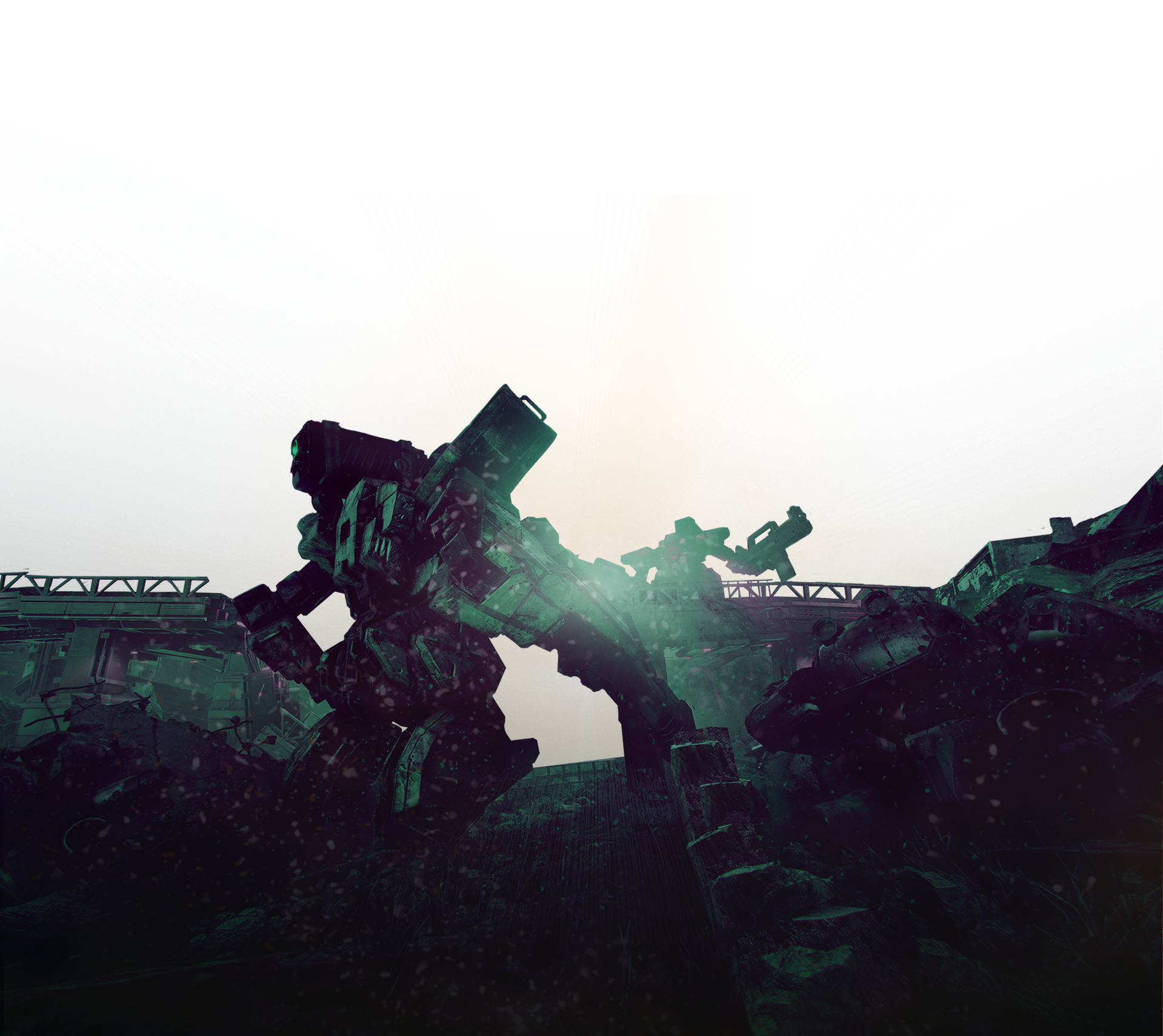
Image source: FRONT MISSION 1st: Remake official website. © 1995, 2022 SQUARE ENIX CO., LTD. All Rights Reserved.
The machines in this artwork have angular bodies and arms, with bulky weapons projecting outward. There is pleasure in choosing equipment and testing that configuration in battle. Reading the story with attention to whom those weapons are pointed at may change how we see the machines, too.
A low overall rating does not mean the story failed to reach someone
Writing about the 2022 remake, RPGFan's Abraham Kobylanski reads an anti-war story of soldiers on both sides caught up in larger forces. He finds Royd's story dated in places, but praises Kevin's perspective for deepening the tragedy of war.3
Nintendo Life's Trent Cannon gives an overall score of 5/10 and criticizes the randomness of combat. Yet he lists the story told from opposing perspectives as a strength.4 That low score cannot establish that Huffman Island's story was rejected, too.
These are two English-language critics, not a survey of opinion abroad. Even so, the structure of seeing war from both sides reached at least these two readers. Their accounts give us specific reasons to distinguish the series' troubled reception in the original column from a failure of its story to communicate.
To me, this seems central to bringing Front Mission to audiences abroad: how far is it read as a story in which players who equip machines and carry out missions change their view of those missions and allegiances? Becoming attached to a mech and finding one's view of war unsettled can happen separately. I want to ask whether both remained.
The replaceable machines of VOTOMS
The original column sees the influence of Armored Trooper VOTOMS in Wanzer design.1 To examine that connection, I want to consider the relationship between machine and operator as well as the shape of the armor.
The official VOTOMS website describes the Scopedog as the most-produced machine of the Hundred Years War. Chirico moves between multiple Armored Troopers, or ATs, rather than remaining paired with one hero robot.5 The soldier's fight continues when the machine changes.
The official glossary also explains the roller dash, driven by gliding wheels in the legs, and the arm punch, driven by a mechanism in the arm.6 Sliding to move and striking with an arm: these actions depend on where the mechanisms sit in the body. Legs and arms do more than decorate its shape. They give us a way to think of the machine as a weapon.
In the pre-release essay on Die Graue Hexe, I considered this way of treating the Scopedog as a weapon. Returning to Huffman Island, I am interested in the distance between a soldier inside a mass-produced weapon and the purposes of a state or army. Machines may be interchangeable without making their operators' circumstances identical. Putting the two works beside each other from this angle lets us ask how their stories see soldiers, beyond similarities in mech design.
In JUNKMETAL's player combat, choices made by enemies and allies can change the role of the same machine. In Metal Storm, losing an arm or leg comes back as a change in what it can do. I have not verified a direct lineage from VOTOMS to either game. The connection is a way of looking beyond a machine's name and silhouette to who uses it, how they use it, and what breaks.
In JUNKMETAL, other people waited beyond the mech
Square Enix's 2003 material described JUNKMETAL as a PC game combining 3D robot action with an MMORPG, in which customized robots fought mechanical life forms and other players. Its description foregrounded group combat and player-versus-player fighting.7
A 2005 Dengeki Online report described building machines from varied parts and a struggle for control between POF and Mugen Corporation. Full service began on April 12, 2004, and ended on September 30, 2005.8
Here, the assembled machine goes out to meet other players. Choosing equipment becomes both an answer to a designed challenge and a way of putting your decisions against someone else's. In group combat, who accompanies you would also change what your machine means, beyond its individual performance.
This comparison does not position JUNKMETAL as a successor to Front Mission. Where Huffman Island offers a place to read soldiers' written circumstances, JUNKMETAL is a place where circumstances arise in response to other people's choices. Both put others on the battlefield, but that does not mean they provide an anti-war narrative in the same form.
Once service ends, testing that connection again becomes difficult. Images and parts lists may survive, but the situation in which friends and enemies gathered at the same time cannot simply be replayed. In the essay on EVE Online, I considered memory accumulated through relationships with others. JUNKMETAL raises a further question: what can remain when the place that made those memories has closed?
In Metal Storm, consider what to break
The game known in Japan as 鋼嵐 - メタルストーム is now listed as 鋼嵐 - メカラシ on its Japanese official website and App Store page. Both names are given here to make clear that they refer to the same game.9
The developer's store description explains customization of machines called STs: their heads, right and left arms, legs, weapons, and units. Snipers target parts; mechanics repair broken ones. Destroying legs impedes movement, while destroying arms prevents weapon use. Part destruction is presented as a tactical choice.9
With this system, the question extends beyond how close an enemy is to defeat. Do you want to stop it moving or deprive it of an attack? Even without finishing it off, you can change what it does next. Arms and legs become conditions for action as well as containers for durability values.
When assembling, you choose parts to expand what your machine can do. When fighting, you destroy parts to reduce what an opponent can do. The official description suggests a design that joins those two directions on the same machine. That provides a reason to place Metal Storm beside Front Mission beyond a resemblance between their robots.
The App Store also lists free distribution and in-app purchases.9 Being able to change parts and being able to reach a desired configuration freely require separate examination. Without investigating acquisition and progression costs in play, it would be premature to call this the return, intact, of a mech game people once wanted.
Next, ask which soldier, rather than which machine
Part destruction in Metal Storm and group combat with customized machines in JUNKMETAL do not erase the reasons to wait for a new Front Mission. Wanting to return to Huffman Island and wanting to assemble a machine in another world can coexist.
Metal Storm's mechanics do not establish that Huffman Island's story has been carried forward elsewhere. JUNKMETAL's battlefield of human players is not the same thing as a written war narrative. Even after comparing similar mechs, we need to return to the story.
The overseas criticism examined here contains records of reading Huffman Island's war as an anti-war story. Next, I want to learn which soldiers more readers and players sympathized with, and which orders or positions they came to question.
Someone may remember a Wanzer's name while forgetting what happened on Huffman Island. Someone else may forget the model number but remember that the enemy side had soldiers, too. To understand what Front Mission left with audiences abroad, I want to ask that far.
Footnotes
-
Ollie Barder, column on Front Mission's overseas reception, Game*Spark, October 4, 2026. Its account of reputation is treated as the columnist's view; this essay does not independently verify causes of poor sales or reception across overseas markets. ↩ ↩2
-
Publisher's Steam page and official website, consulted for languages, customization, and setting. The image uses an external URL from the official website. ↩
-
Abraham Kobylanski, Front Mission 1st: Remake, RPGFan, December 20, 2022. His evaluation of the story is treated as his own reading. ↩
-
Trent Cannon, Front Mission 1st: Remake Review, Nintendo Life, November 30, 2022. Overall and narrative evaluations are considered separately. ↩
-
VOTOMS Web, Scopedog, consulted for mass production and Chirico's changes of machine. ↩
-
VOTOMS Web, glossary, consulted for roller-dash and arm-punch mechanisms. Connections to JUNKMETAL and Metal Storm are this essay's comparative interpretation, not evidence of development influences. ↩
-
Square Enix, Tokyo Game Show 2003 title presentation, page 8. This is a pre-release presentation, not a complete account of the game's eventual specifications. ↩
-
Dengeki Online, report announcing JUNKMETAL's service closure and September free-play period, May 31, 2005. Service dates and the two factions are drawn from contemporary reporting. ↩
-
Japanese official website and developer's App Store description, consulted for the current Japanese name, customization, jobs, part destruction, free distribution, and in-app purchases. Accessed October 5, 2026. ↩ ↩2 ↩3