
Before Accepting the Verdict: The Columns Behind Mamoru Oshii's Uragiri Gomen!
Reading Mamoru Oshii's film conversations, I keep coming back to what he notices on the way to a verdict. A filmmaker's changing interests during a shoot. The sequence in which events appear. I want to try those ways of looking. His judgments of other viewers need not come with them.
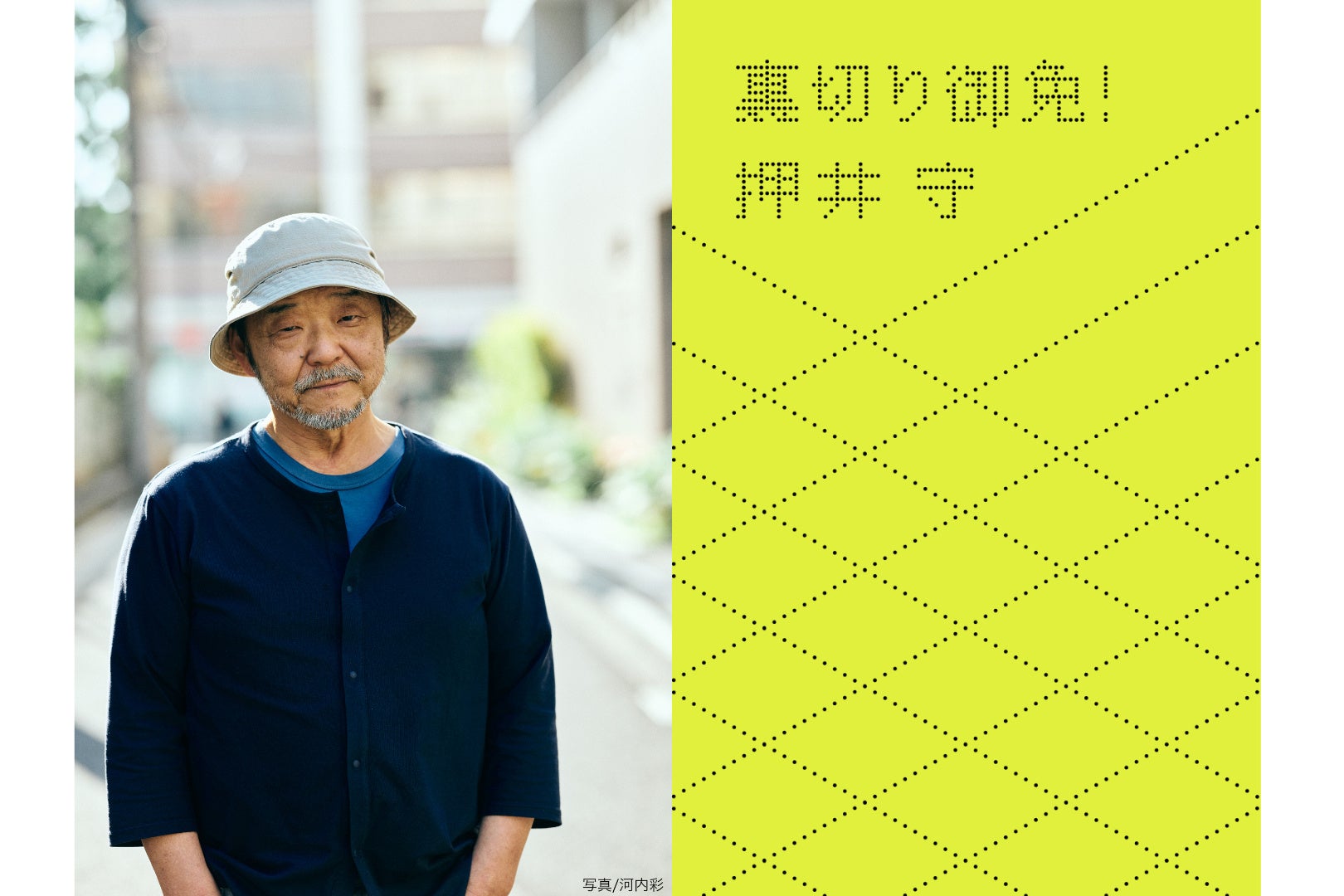
Uragiri Gomen! (『裏切り御免!』) is scheduled for December 7, 2026. It will collect expanded and re-edited columns from TV Bros. and MOVIE WALKER PRESS. The announcement credits Oshii as author, Maki Watanabe for composition and text, and Yasuomi Umetsu for illustrations.1
I read the relevant installments on A Man Vanishes, Pulp Fiction, and Arrival available as of October 18. I have not read the book or rewatched the films for this article. What follows is a reading of those conversations, without discussing the films' endings or central revelations.
When the subject changes
Oshii points to offscreen prompting in A Man Vanishes, which begins as a search for a missing person. He reads the director's verbal steering of a subject as a shift from recording toward staging.2
Following this clue on another viewing, I want to listen not only to what is said but to the question being answered. Before treating testimony as evidence of character, listen to the question that elicited it. Keep the filmmaker's prompting and the subject's response together. Then the issue becomes whether the film discovered something or tried to bring it about.
In the later installment, Oshii reads this change as something that happened along the way, rather than a planned device.3 But identifying intervention in a scene is some distance from knowing the plan before filming. Establishing what Shohei Imamura had in mind would require a separate examination of production records or his own statements. What I can borrow here is a way of listening again to the filmmaker's actions, without treating every loss of direction as a virtue.
Sequence shapes the aftertaste
In Pulp Fiction, Oshii values how the script and editing rearrange chronology to change the feeling at the end, beyond the mere interweaving of several stories.4
The question moves from what happened during filming to what reaches the audience last. On another viewing, I would like to keep what happens within the story distinct from how its closing scene feels. A lighter aftertaste does not undo earlier events. If those events remain in mind, that lightness could register as irony. Recognizing the effect of sequence need not leave us with Oshii's response.
On the next page, Oshii himself adds that structure alone cannot produce this effect: characters, dialogue, casting, and other conditions must come together.5 Reordering a synopsis to understand the mechanism is therefore not enough. Who speaks at the end, and in what tone? Returning to that scene can reveal work that sequence alone cannot explain.
Oshii also infers that this construction was a way for Tarantino to survive as a director.4 It is an incisive account, but understanding a film's effect does not establish why its maker chose it. Speculation has a place here. Still, effects we can examine on screen and claims requiring research into the production cannot carry the same certainty.
What we are shown, and what we supply
In the later Arrival column, Oshii values editing for guiding how viewers understand the protagonist. He does not treat the film as depending on a surprising answer alone.6
This is another discussion of editing, but the question I want to borrow is different. With Pulp Fiction, I considered a change in aftertaste. With Arrival, I want to return to the grounds on which we formed our view of a character. Was something explicit in an image or a line of dialogue? Or did we supply an explanation by connecting scenes?
On another viewing, we can return to the scenes before our understanding changed and check whether material for another reading was already there. Were we given new information later, or did we become able to receive the same information differently? Making that distinction moves us from having been surprised to asking how the surprise was made. I will leave the reveal unspoken here. Even after we know it, there is a reason to return to the images.
Learning where to look without handing over judgment
The pleasure of film conversations does include the speaker's certainty and partiality. Turning them into a convenient viewing guide would thin out Oshii's voice. I do not want to present him with that force removed.
Still, something in the Arrival column gives me pause. Oshii endorses freedom of interpretation, yet faults viewers who reject the protagonist's choice for not understanding film or life.6 I feel a tension in those positions appearing within the same discussion.
Being able to explain why the protagonist makes a choice is separate from supporting it ourselves. To identify an error of interpretation, we can point to the information someone has misread. Skipping that check and linking a different response to a failure to understand life narrows the room for discussing the film. Differences in feeling and value can remain even after we understand its construction better.
The earlier article on Armored Trooper VOTOMS: Die Graue Hexe separated the desire to look forward to an Oshii film from the judgment involved in predicting it. Here I want to keep a similar distance from Oshii's own words. We can learn where to look without having our responses decided in advance.
What I want to retain after reading is somewhere to return on the next viewing. Listen again to the prompting, set the feel of the closing scene against the facts of the story, and check what explanations we supplied ourselves. If Oshii's account becomes insufficient there, another reading can begin. We can use a way of looking we have learned and still leave with a different response.
Sources and scope
Publication information and the columns were checked on October 18, 2026. The book's additions and revisions have not been examined. The linked columns contain major spoilers for the films.
Footnotes
-
KADOKAWA's publication announcement, October 15, 2026. The planned release was also checked against the product listing. ↩
-
MOVIE WALKER PRESS, Maki Watanabe's A Man Vanishes, first installment, November 20, 2025. ↩
-
MOVIE WALKER PRESS, A Man Vanishes, second installment, page 3, December 4, 2025. ↩
-
MOVIE WALKER PRESS, Pulp Fiction, first installment, February 28, 2026. ↩ ↩2
-
MOVIE WALKER PRESS, Pulp Fiction, first installment, page 2, February 28, 2026. The exchange about the conditions supporting the effect of the structure. ↩
-
MOVIE WALKER PRESS, Arrival, second installment, December 29, 2025. ↩ ↩2